
 English
 Croatian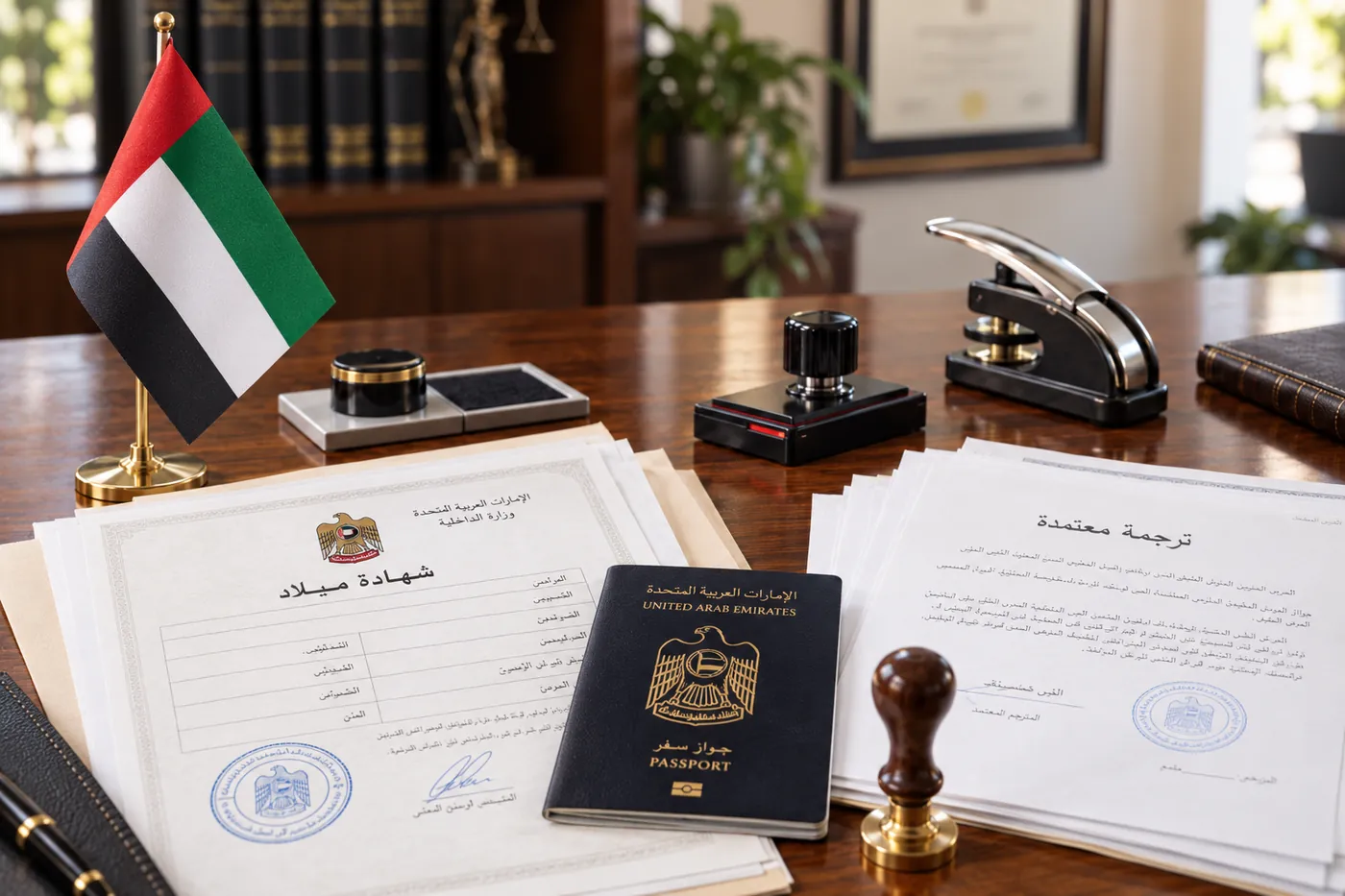
Court interpreter for the Arabic language – documents from Arab countries and official use
• the issuing country determines the legal and administrative context of the Arabic document
• Arabic-English columns may contain differences
• Hijri and Gregorian dates and multi-part names require special control
Arabic connects a large number of countries with a language, but not with a unified legal system. A document from Saudi Arabia, UAE, Egypt or Jordan is therefore translated according to country and issuer, with special control of Arabic-English columns, multi-part names and calendar entries. Information about the procedure is available on the site certified translations by court interpreters.
Arabic official documents generally use standard written Arabic, but administrative names and forms vary between countries. That’s why we always ask for the country of issue for a translation. Personal names can have several Latin forms, so we harmonize them with a passport or other identification document. You will find related translations and language pairs in the overview Asian languages.
When is a court interpreter for Arabic needed?
Most often, birth and marriage certificates, certificates of criminal record, diplomas, employment contracts, court decisions, powers of attorney and business documents are translated. Arabic seals and handwritten notes may contain information that is not repeated in the main text and must be sufficiently legible.
Arabic documents that we most often translate according to the country of issue
- Birth, marriage and other registry documents
- Criminal record certificates, residence and status
- Diplomas and academic certificates
- Employment contracts and residence documents
- Court decisions, powers of attorney and notarial documents
- Business contracts, registers, licenses and technical documentation
This list covers commonly requested documents, but is not exhaustive. You can also send another type of document for Arabic translation, we pay particular attention to the country of issue, the standard or regional form of the language for interpreting, the direction of writing, the official Latin-script spelling of names, stamps and dates.
The Arabic language is not a single administrative system: the country of issue is mandatory information
Official Arabic documents generally use standard written Arabic, but the types of documents, names of institutions, forms, dates and legal formulas differ between Saudi Arabia, the UAE, Egypt, Jordan, Iraq and other countries. That is why the country of issue is indicated already when sending the inquiry.
When interpreting, it is important to indicate the country or region of the speaker and the topic of the conversation. Formal Standard Arabic and everyday dialects are not always interchangeable in all situations.
Saudi Arabia, the UAE and the Gulf States
When it comes to documents from the Gulf, we often translate work, residence, educational and business documents. We pay particular attention to the Latin notation of the name from the passport, the document number, the name of the sponsor or employer when it is mentioned, and all certifications and stamps.
Egypt and North Africa
Birth, educational and legal documents may have different names of institutions and forms from the Gulf countries. We do not use one “Arabic” administrative dictionary for all countries, but adapt the terminology to the actual issuer.
Iraq, Jordan and the Levant
For personal and legal documents, we pay particular attention to multi-part personal names, possible different Latin transliterations and dates. For interpreting, we determine the country and speech variant in advance because standard written Arabic does not necessarily determine the speech of the participants.
Certification of the document from the Arab issuing country – what to check before ordering
For official use, we first check whether there is a permanent court interpreter for the Arabic language available for the requested language pair and whether the body to which the document is submitted accepts such a form. If direct certification is unavailable, we ask the relevant authority to confirm whether an alternative is acceptable. Before quoting, we check the country of issue, the standard or regional form of the language for interpreting, the direction of writing, the official Latin-script spelling of names, stamps and dates. We also confirm the number of copies, whether the translation must be attached to the original or a copy, and any Apostille or other legalisation requirements specified by the recipient.
Interpretation: Arabic and Croatian in official and business situations
We arrange interpreting for business meetings, appointments with a notary or registrar, conversations with the employer, court and administrative proceedings and other official appointments agreed in advance. For Arabic, we check the variant or regional form when relevant, location, date, duration and topic before booking. If the organiser or competent authority requires the presence of a permanent court interpreter, this should be stated when sending the request.
Apostille and legalisation for a document from an Arab country of issue
An Apostille confirms the origin of a public document for international use; it does not replace a certified translation. The requirements and the order of the steps depend on the countries involved and the receiving institution. We explain the process in our Apostille guide.
What we check before confirming the Arabic translation
Before quoting, we check three things in particular: the country of issue determines the legal and administrative context of the Arabic document; Arabic-English columns may contain differences; Hijri and Gregorian dates and multi-part names require special control. We then confirm the scope, source and target languages, available form of certification, total price, deadline and delivery arrangements. Your quote reflects the actual work involved, rather than an estimate based only on page count.
What to send for an accurate assessment of the document from the Arab issuing country
- To reliably evaluate an Arabic document, we need all pages, including reverse sides, labels, seals, and attachments.
- Specify the source and target languages, the country of issue, the purpose of use, the requested deadline and information about the certification. In particular, we will check the country of issue, the standard or regional form of the language for interpreting, the direction of writing, the official Latin-script spelling of names, seals and dates.
- For the Arabic translation, we conclude the offer only after checking all pages, the availability of experts and the request for a certified translation.
- Once you confirm the order, we translate and check your document. We send the digital file and arrange delivery of any certified paper copies.
What affects the price and deadline of document translation from the Arab country of issue?
We base your quote on the actual document: number of words and pages, terminology, copy quality, source and target languages, certification and desired deadline. In the case of interpreting, the duration, location and preparation are also taken into account. Handwritten stamps, complex right-to-left forms and different national administrative systems can increase verification times. We state the exact amount and deadline only after reviewing the material and confirming the availability of the appropriate specialist.
Frequently asked questions
Send your document and request a quote
Send us your document for Arabic translation, or tell us about your interpreting appointment. We will confirm availability, certification options, the total price, deadline and delivery arrangements. To discuss your requirements and send your documents, visit Inovatus Translations contact details.